
How to Start Freelancing in 2026 (Step-by-Step Beginner Guide)
Freelancing is a work model where individuals offer services independently to clients instead of working as full-time employees. If you’re wondering how to start freelancing, you’re not alone. In 2026, freelancing is growing rapidly due to remote work expansion, AI-powered productivity tools, and global access to clients. However, increased competition and endless online advice often leave beginners confused about where to begin.
This guide is designed for students, job seekers, and side hustlers who want clarity—not hype. Whether you want extra income or a full-time freelance career, you’ll learn the exact steps to choose a skill, find clients, and build a structured income roadmap. By the end, you’ll understand how to land your first client and move forward with confidence instead of guesswork.
What Is Freelancing?
Freelancing is an independent work model where individuals provide services to clients without being employed by a single company. Freelancers earn project-based income, often work remotely, set their own schedules, and manage multiple clients. Payment is typically based on completed tasks, hourly contracts, or ongoing service agreements.
How to Start Freelancing in 7 Simple Steps
- Understand what freelancing really means
- Choose one beginner-friendly skill
- Validate market demand before investing time
- Pick the right freelancing platform
- Build a simple, proof-based portfolio
- Start applying consistently with structured proposals
- Improve weekly and think long-term like a business owner
Simple steps. Clear direction. Consistent action.
1. Understand What Freelancing Really Means
Before learning how to start freelancing, you must clearly understand what this career model actually involves.

Freelancing vs Traditional Jobs
Freelancing is different from a regular 9–5 job in several ways:
- No fixed salary – Your income depends on projects and clients.
- Project-based income – You’re paid per task, contract, or retainer.
- Flexibility + responsibility – You control your schedule, but you’re also responsible for finding clients and managing deadlines.
Freedom sounds attractive, but it comes with accountability. There’s no manager pushing you—you build your own structure.
How Freelancers Get Paid
Freelancers typically earn in three main ways:
- Hourly – Paid for tracked work hours.
- Project-based – Fixed price for a defined outcome.
- Retainers – Monthly recurring payment for ongoing services.
As you grow, retainers usually provide the most stability.
Is Freelancing Worth It in 2026?
Yes—but only if you approach it strategically.
- AI advantage – Tools now help you work faster and compete globally.
- Global opportunity – Clients hire worldwide, not just locally.
- Requires discipline – Without structure, income becomes unstable.
Freelancing rewards consistency, specialization, and long-term thinking.
2. Choose a Skill You Can Monetize
You don’t start freelancing by “looking for clients.”
You start by choosing a skill someone will pay for.

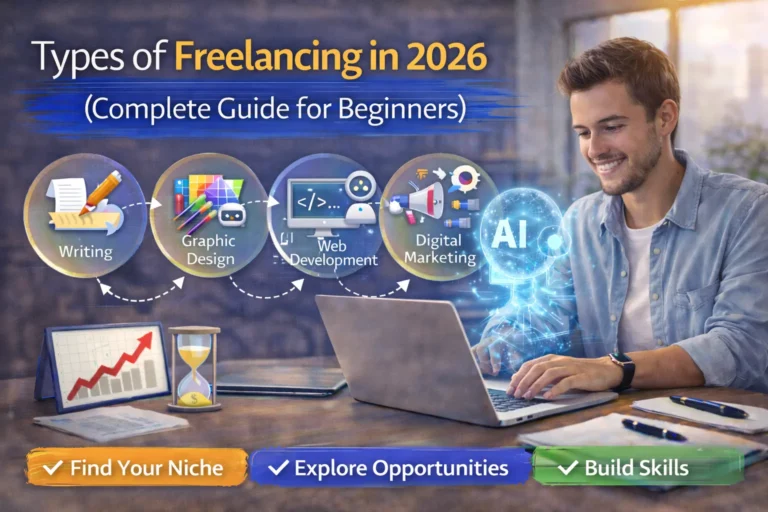
Beginner-Friendly Freelance Skills in 2026
Some strong entry-level options include:
- Content writing
- Graphic design
- Video editing
- Social media management
- Web development
- AI-assisted services (prompt design, content optimization, automation setup)
These skills have consistent online demand.
What Is the No. 1 Skill for Freelancing?
The most important freelance skill is problem-solving combined with communication.
Clients don’t hire “skills.”
They hire solutions to problems.
If you can clearly understand a problem and communicate your solution professionally, you already have a competitive edge.
How to Choose the Right Skill
Use this simple filter:
- Interest – Can you stay consistent learning it?
- Market demand – Are clients actively paying for it?
- Income potential – Does it allow rate growth?
- Learning curve – Can you become competent within 3–6 months?
Passion alone is not enough. Demand matters more.
3. Validate Market Demand Before Starting
Before investing months learning a skill, confirm that buyers actually exist.
You can validate demand on platforms like:
- Upwork
- Fiverr
These platforms show real-time market signals

Check Job Volume
Search your skill and observe:
- How many jobs are posted daily?
- Is activity consistent?
High activity indicates demand.
Analyze Budgets
Look at posted budgets:
- Are clients paying realistic rates?
- Do higher-budget jobs exist?
Low-budget markets limit long-term growth.
Study Top Freelancers
Review profiles of successful freelancers:
- How do they position themselves?
- What niche do they focus on?
- What rates are they charging?
This shows what works.
Avoid Oversaturated Niches
If thousands of freelancers offer the exact same generic service at very low rates, growth becomes difficult.
The rule is simple:
Demand > Passion alone.
Choose areas where clients are actively spending money.
4. Pick the Right Freelancing Platform
Not every platform works the same way. Your skill and strategy determine where you start.
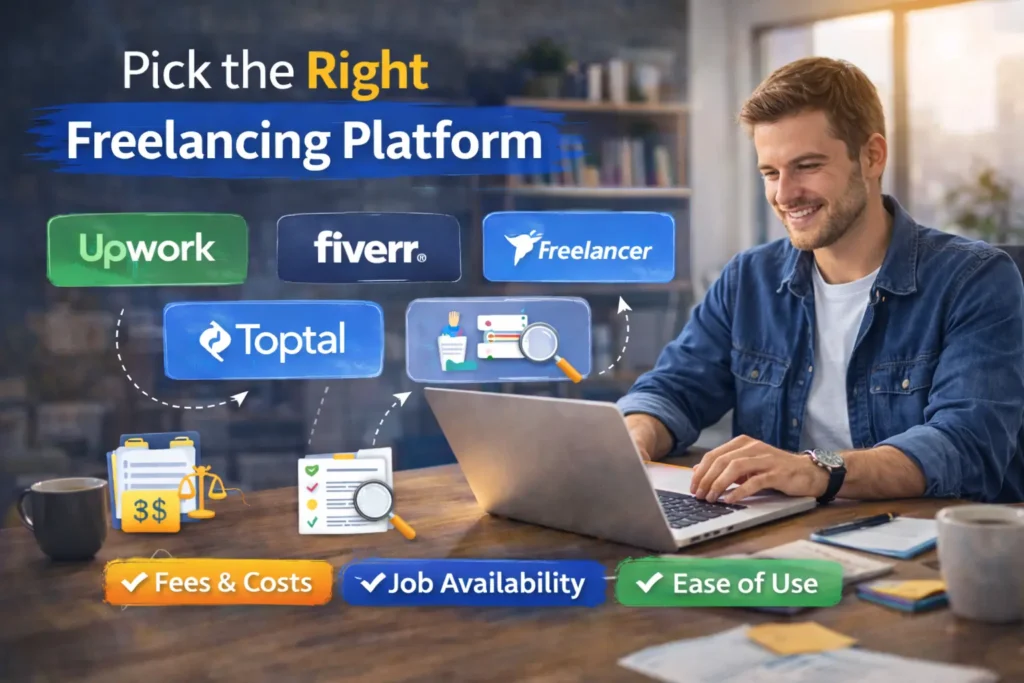
Upwork (Contract-Based Model)
Upwork operates on a proposal system. Clients post jobs, freelancers apply.
Best for:
- Developers
- Marketers
- Writers
- Consultants
It’s competitive but strong for long-term contracts.
Fiverr (Gig-Based Model)
Fiverr works differently. You create service listings (gigs), and buyers find you.
Best for:
- Designers
- Video editors
- Social media services
- Creative tasks
It’s beginner-friendly but requires strong gig optimization.
Freelancer.com
A large bidding marketplace with global competition. Suitable if you’re comfortable applying frequently and competing on price early.
LinkedIn for Direct Clients
LinkedIn allows you to:
- Build authority
- Connect with decision-makers
- Send direct messages
Long-term, this reduces platform dependency.
Direct Outreach
Email pitching to targeted businesses can:
- Eliminate platform fees
- Reduce competition
- Build retainer relationships
For deeper comparison, read:
→ Freelancing Platforms Guide
→ Upwork Freelancing Tips
→ Fiverr Freelancing Tips
5. Build a Simple Portfolio (Even with No Experience)
Clients need proof—even if you’re new.
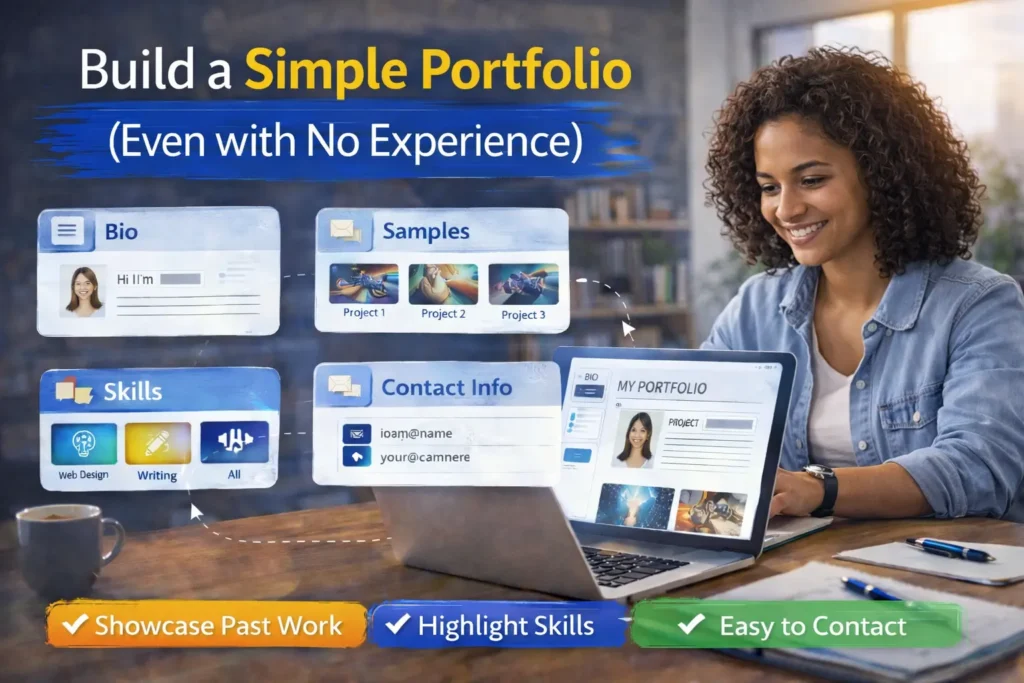
Create Sample Projects
If you have no clients yet:
- Design mock projects
- Write sample articles
- Redesign existing websites
- Create brand concepts
Practice projects still demonstrate skill.
Use Case Study Format
Structure your portfolio like this:
- Client problem – What was wrong or missing?
- Your solution – What did you create or improve?
- Expected results – What impact would it generate?
Clarity builds trust.
Before/After Model
Show transformation:
- Weak design → improved design
- Low-performing copy → optimized copy
- Basic branding → strategic identity
Humans understand contrast better than description.
Add Testimonials (Even Small Ones)
If possible:
- Ask classmates
- Offer discounted trial projects
- Work with small businesses
Social proof reduces client risk.
Why Proof Matters (Simple Psychology)
Clients ask themselves:
- Has this person done this before?
- Can they deliver what they promise?
A clear portfolio answers both questions.Proof builds confidence.
Confidence converts clients.
6. Set Beginner Pricing the Smart Way
Pricing is where many beginners struggle. Charge too little and you feel stuck. Charge too much and you may scare away early clients. The goal is balance—not desperation.

Hourly vs Project Pricing
Hourly pricing
- Easier for beginners
- Simple to calculate
- Limits income scalability
Project pricing
- Focuses on outcome, not time
- Higher earning potential
- Encourages efficiency
If possible, start with small fixed projects. It builds confidence and teaches scope control.
Beginner Benchmarks
Your first goal is not maximum income.
It’s building proof and reviews.
Start slightly competitive—not cheap.
For example:
- Entry-level writing: modest per-article pricing
- Logo design: structured package pricing
- Social media management: starter monthly package
As soon as demand increases, adjust rates upward.
Avoid the “Cheap Freelancer” Trap
Low pricing attracts:
- High demands
- Difficult clients
- Endless revisions
- Low respect
Once you position yourself as “cheap,” it’s hard to reposition as “professional.”
Price reflects perceived quality.
When to Raise Rates
Increase rates when:
- You’re fully booked
- You consistently deliver strong results
- Clients stop questioning your price
- You feel slightly underpaid
Small increases every few months work better than sudden jumps.
Is $100 a Good Price for a Logo?
It depends.
For a beginner building a portfolio, $100 can be reasonable if:
- The scope is clearly defined
- Revisions are limited
- The project helps build proof
However, professional branding projects often range much higher because they include strategy, research, and brand systems.
7. Start Applying & Get Your First Client
Freelancing begins when you take action.
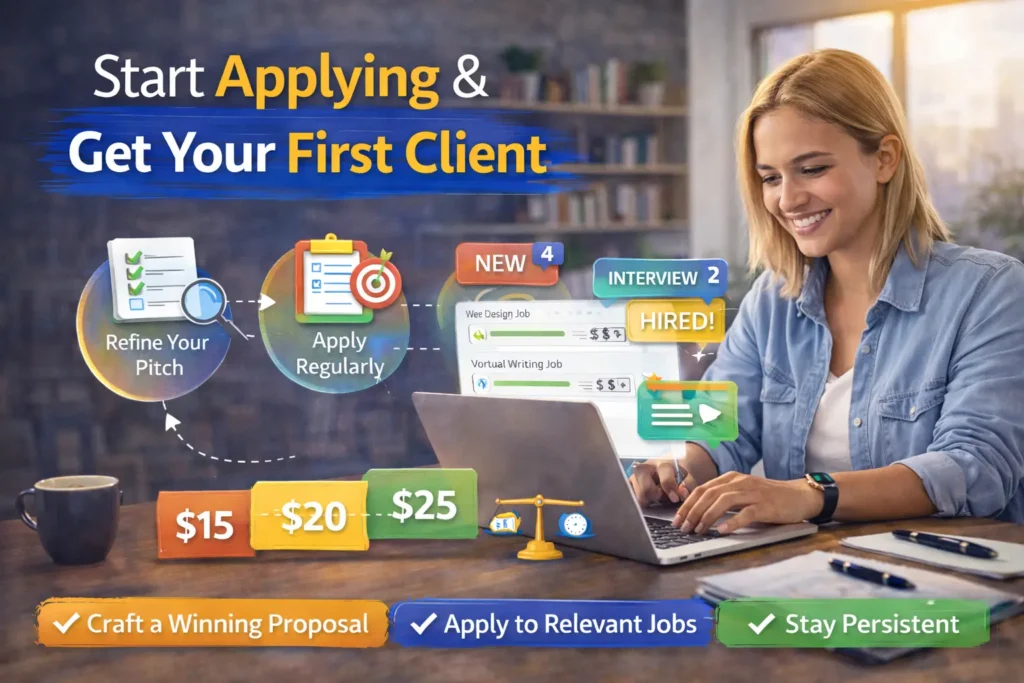
Proposal Structure for Beginners
Use this simple structure:
Hook
Mention something specific about the client’s project.
Problem Understanding
Show you understand their goal.
Solution
Explain how you would approach it.
Proof
Share one relevant sample.
CTA (Call to Action)
Invite them to discuss further.
Keep proposals short, focused, and personalized.
Daily Application System
Consistency wins over motivation.
- Apply to 5–10 relevant jobs daily
- Focus only on high-fit projects
- Track applications in a spreadsheet or Notion
- Monitor response rate weekly
Structure reduces emotional frustration.
How Long Does It Take to Get the First Client?
Realistically: 2–8 weeks.
It depends on:
- Skill demand
- Profile quality
- Application consistency
- Competition level
Most beginners quit too early. The first client often comes after steady effort.
8. How to Freelance on the Side (While Studying or Working)
Many people start freelancing part-time before going full-time.
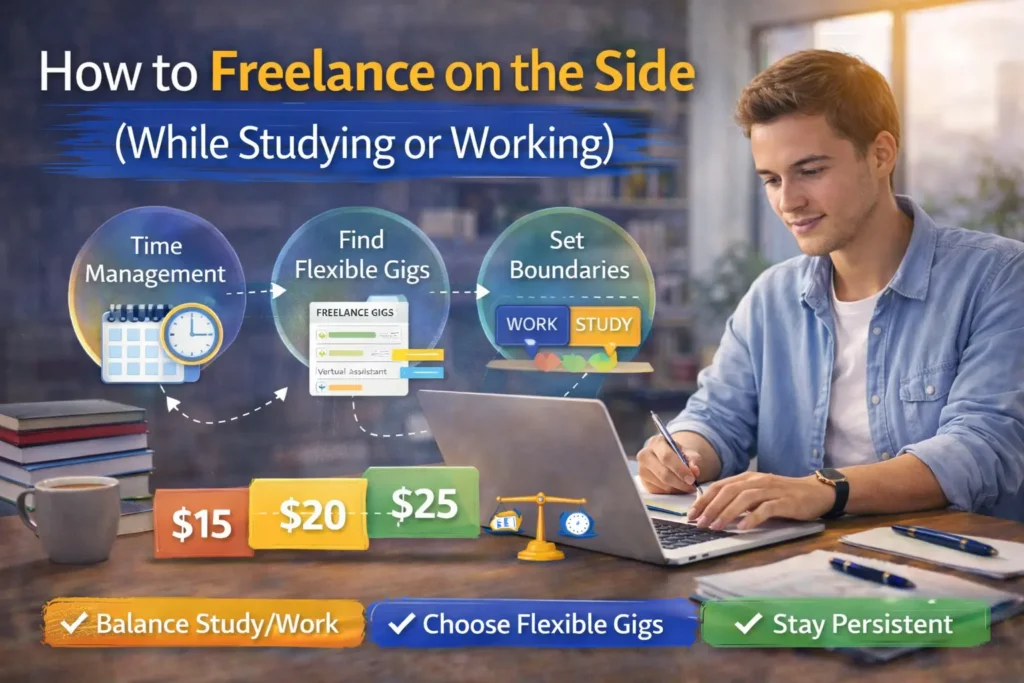
This applies to:
- Students
- Employees
- Career switchers
Time Blocking Method
Allocate fixed time blocks:
- 1–2 hours for skill building
- 1 hour for applications
- Weekend for portfolio improvements
Small daily effort compounds.
Skill + Application Split
Avoid only learning without applying.
Use this ratio:
- 50% improving skill
- 50% applying for jobs
Action accelerates learning.
Income Goal Planning
Set realistic milestones:
- Month 1: First client
- Month 2–3: Cover one bill
- Month 6+: Stable side income
Freelancing grows gradually, not instantly.
9. Avoid Common Beginner Mistakes
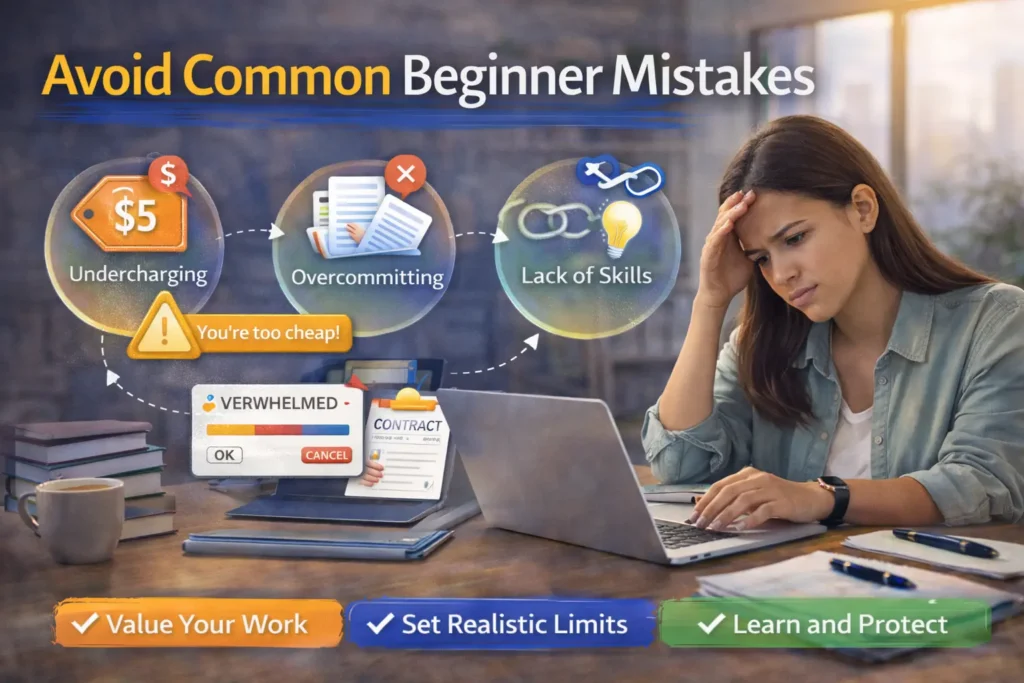
Mistakes slow progress more than lack of skill.
- Accepting very low rates out of desperation
- Working without contracts
- Applying inconsistently
- Offering generic services without niche focus
- Switching platforms too fast
- Expecting instant success
Freelancing rewards patience and system-building.
10. How to Become a Successful Freelancer Long-Term
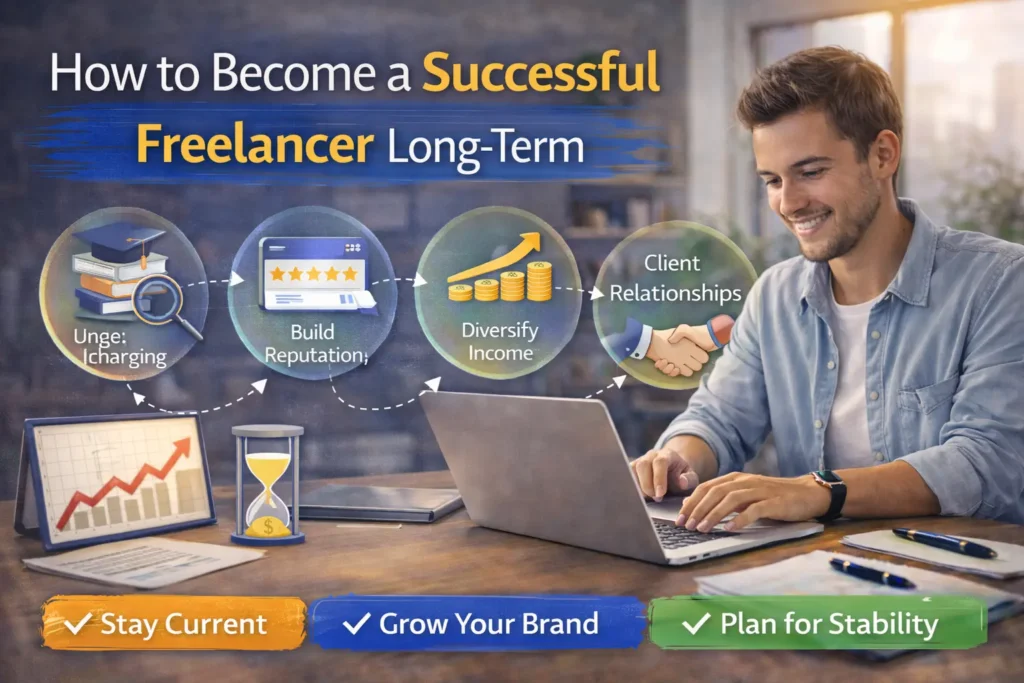
Starting is step one. Sustainability is the real goal.
This answers:
- how to be a successful freelancer
- how to succeed as a freelancer
Build Systems
Create:
- Proposal templates
- Outreach routines
- Project checklists
- Weekly review process
Systems reduce chaos.
Improve Skill Every Year
Upgrade at least one major skill annually.
Higher skills → higher rates → better clients.
Build Authority
- Share insights online
- Publish case studies
- Optimize LinkedIn
- Collect testimonials
Authority reduces competition pressure.
Move Toward Retainers
Recurring monthly clients create stability.
Instead of one-time tasks, offer ongoing support.
Retainers reduce income fluctuation.
Think Like a Business Owner
Freelancers who succeed long-term:
- Track income
- Manage expenses
- Plan growth
- Raise rates strategically
You’re not just doing tasks—you’re building a service business.
11. Use AI as a Beginner Advantage (2026 Focus)

AI is not your replacement. It is your leverage.
AI for Research
Use AI tools to:
- Generate ideas
- Analyze competitors
- Explore niche opportunities
- Outline projects
Research becomes faster and clearer
AI for Drafting
AI can help:
- Structure content
- Improve grammar
- Draft proposals
- Brainstorm headlines
Always refine manually.
AI for Learning Faster
- Explain complex topics
- Provide practice scenarios
- Simulate client questions
- Accelerate skill development
AI shortens the learning curve.
Why Human Strategy Still Wins
AI speeds execution.
Humans create value.
Clients pay for:
- Judgment
- Strategy
- Creativity
- Emotional intelligence
- Clear communication
Frequently Asked Questions About Starting Freelancing
Conclusion: Start Smart, Stay Consistent, Think Long-Term
Starting freelancing is not complicated—but it requires clarity and action. First, choose a skill you can monetize. Then validate real market demand before investing months of effort. Build a simple portfolio that proves capability, not perfection. Start applying consistently, even when responses are slow. And most importantly, improve every single week.
Freelancing is not luck.
It is positioning + persistence.
The freelancers who succeed are not the most talented—they are the most consistent. They refine their niche, upgrade their skills, optimize their profiles, and think long-term.
Don’t wait for the “perfect moment.”
Pick one skill.
Apply today.
Improve tomorrow.
To go deeper, explore:
→ Freelancing Tips
→ Freelancing Tips for Beginners
→ Freelancing Platforms Guide
Your freelance career begins the moment you decide to take structured action.