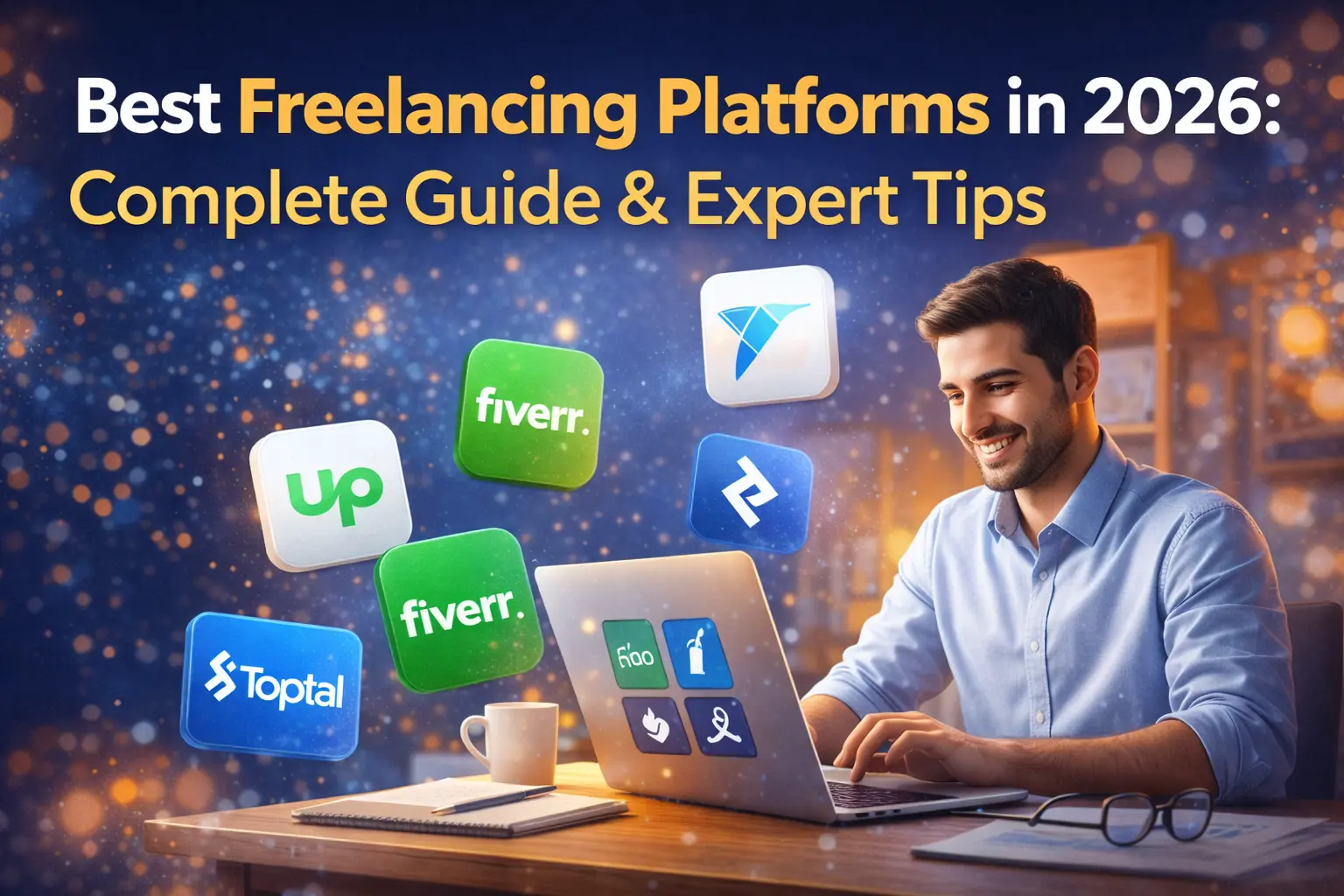
Best Freelancing Platforms in 2026: Complete Guide & Expert Tips
Freelancing platforms and tips for freelancers have become essential knowledge in 2026 as more professionals shift to remote work. Freelancing platforms are online marketplaces that connect independent professionals with clients worldwide, offering tools for profiles, job listings, payments, and communication. With AI tools increasing productivity and global competition rising rapidly, choosing the right platform can directly impact your visibility, income potential, and long-term growth.
Many beginners feel overwhelmed. Should you start with Upwork, Fiverr, LinkedIn, or another platform? Each marketplace works differently, and picking the wrong one can slow your progress.
This guide is designed for beginners and freelancers considering a switch. By the end, you’ll have clarity on the best platforms for your skill level, understand how they compare, and gain a practical roadmap to start earning strategically—not randomly.
What Are Freelancing Platforms?
Freelancing platforms are online marketplaces that connect independent professionals with clients seeking services. They provide profile systems, gig or job listings, secure payment protection, messaging tools, and review systems. These platforms enable freelancers to work remotely with global clients while managing contracts, communication, and earnings in one place.
Best Freelancing Platforms in 2026
- Upwork – Best for professional freelancers seeking long-term contracts and higher-value clients
- Fiverr – Ideal for beginners and service-based gig models with passive search visibility
- Freelancer.com – Large global marketplace with high competition and diverse projects
- Toptal – Premium platform with strict screening and high-paying clients
- PeoplePerHour – UK-focused freelance marketplace with mid-level competition
- Contra – Modern, commission-free platform for independent professionals
- LinkedIn – Strong option for direct client outreach and authority building
- Direct Outreach – Email pitching and niche targeting beyond traditional marketplaces
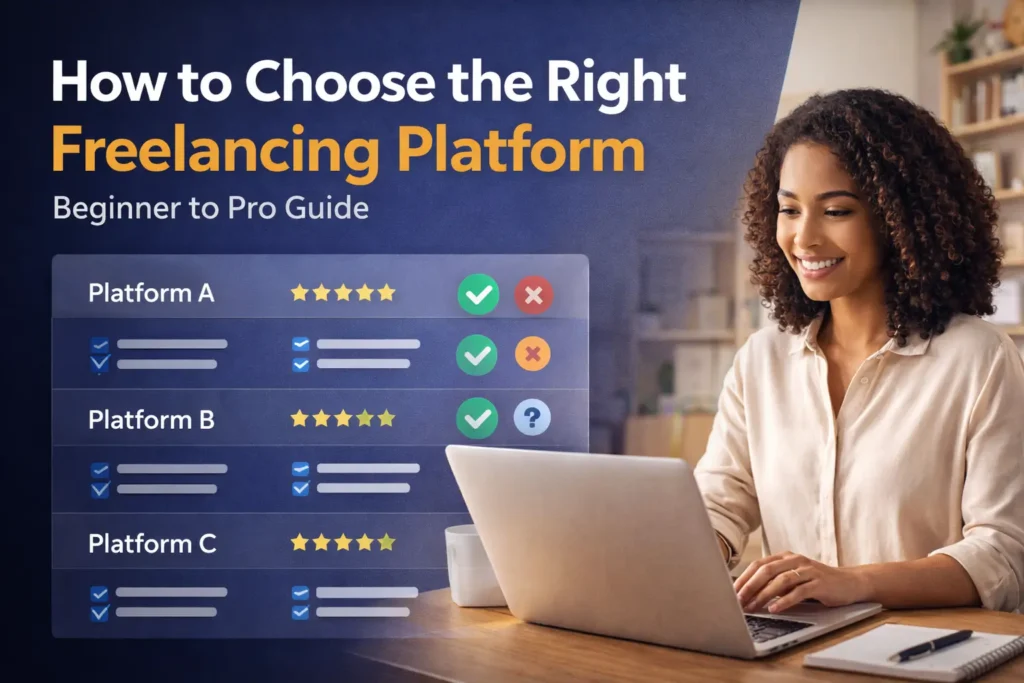
1. How to Choose the Right Freelancing Platform
Choosing the right platform can determine how fast you grow, how much you earn, and what type of clients you attract. Not every platform suits every freelancer. Instead of joining all marketplaces, use a structured decision framework.
Your Skill Type
Different platforms favor different skill categories:
- Creative services (design, video editing, branding) perform well on gig-based platforms.
- Technical services (development, automation, data, SEO) thrive on contract-based platforms.
- Consulting & strategy services (marketing strategy, business consulting, finance) work best where long-term contracts are common.
Choose platforms aligned with how your service is delivered
Your Experience Level
- Beginners → Platforms with built-in search visibility and smaller gigs are easier to enter.
- Intermediate freelancers → Marketplaces with proposal systems allow better positioning.
- Experts → Premium platforms with strict screening provide higher-paying opportunities.
Your level determines where you compete best.
Your Income Goals
- Side income → Gig-based marketplaces may offer faster entry.
- Full-time freelance career → Contract-based platforms with recurring work are more stable.
Short-term cash flow and long-term income strategy require different environments.
Competition Tolerance
Some platforms are highly competitive but offer higher-paying clients. Others are easier to enter but may attract lower budgets.
Ask yourself:
- Can I handle competitive bidding?
- Do I prefer inbound gig visibility?
Am I ready to specialize deeply?
Decision Framework
- Use this simple model:
- Define your skill category.
- Assess your experience level.
- Clarify income goal (side vs full-time)
- Evaluate competition tolerance.
- Start with one primary platform.
- Optimize before expanding.
2. Upwork – Best for Long-Term Professional Contracts
Upwork operates on a job marketplace model where clients post projects and freelancers submit proposals using a Connect bidding system.

It rewards specialization, profile optimization, and strategic bidding.
Pros
- Access to serious, business-focused clients
- Opportunity for long-term contracts and retainers
- Hourly payment protection system
Strong client verification process
Cons
- Requires Connects to bid on projects
- Proposal competition can be intense
Beginners may struggle without positioning
Best For
- Developers
- Digital marketers
- Content writers
- Consultants
Technical freelancers
Mini Tips for Freelancers on Upwork
- Choose a focused niche instead of general services
- Write custom proposals tailored to each job
- Optimize your profile headline with clear outcomes
- Showcase measurable results in your portfolio
- Track proposal-to-response ratio weekly
Upwork rewards clarity, specialization, and consistent activity.
3. Fiverr – Best for Gig-Based Services
Fiverr works differently. Instead of bidding, freelancers create service listings (gigs), and buyers search and purchase directly.
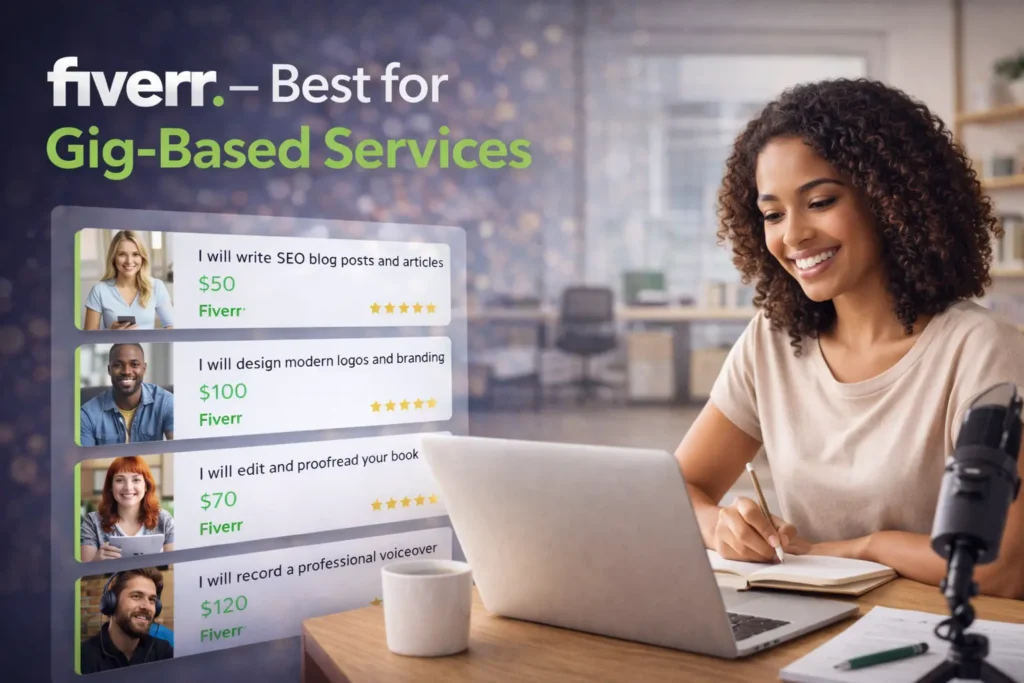
Visibility depends on optimization and performance metrics.
Pros
- No bidding required
- Beginner-friendly structure
- Passive visibility through search ranking
Easy entry for creative services
Cons
- High competition in popular categories
- Algorithm-dependent visibility
- Requires strong gig optimization
Best For
- Graphic designers
- Video editors
- Social media managers
- Logo creators
- Short-form content creators
Fiverr Optimization Tips
- Use keyword-optimized gig titles
- Create high-quality, clean gig images
- Offer structured 3-tier packages
- Respond quickly to buyer messages
- Avoid unlimited revisions
- Improve gig descriptions regularly
- Fiverr rewards clarity, activity, and strong conversion metrics.
4. Freelancer.com – Large Marketplace Option
Freelancer.com is one of the oldest global freelance platforms with a wide variety of job categories.
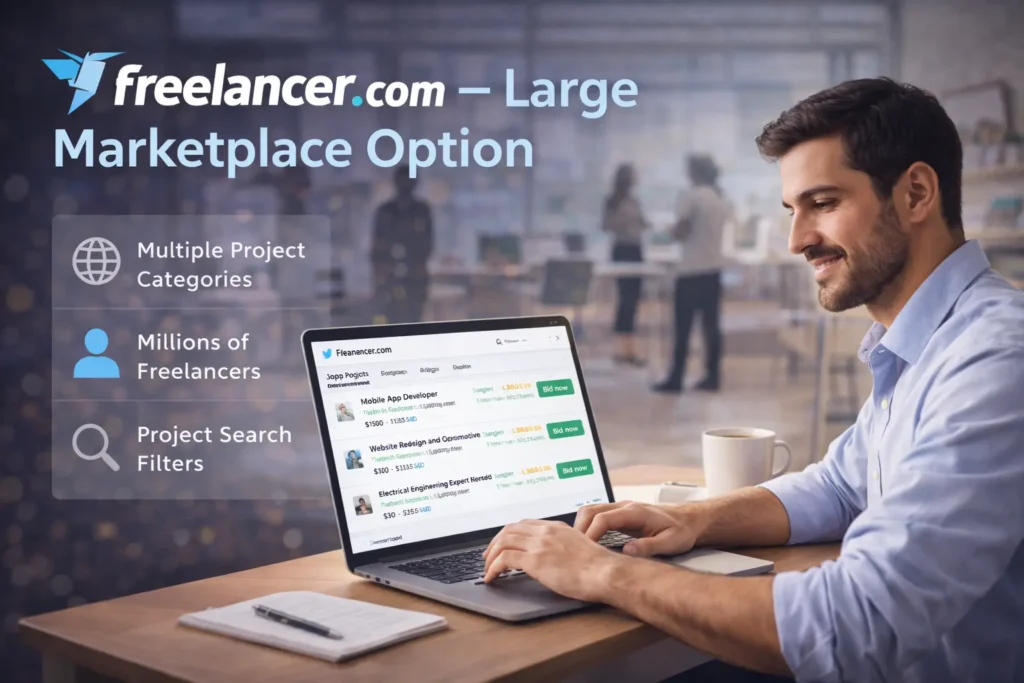
Overview
- Competitive bidding marketplace
- Large global client base
- Diverse job categories
Pros
- High job volume
- Suitable for multiple industries
- Lower entry barrier
Cons
- Heavy competition
- Price-driven bidding environment
- May attract lower-budget projects
Best For
- Freelancers comfortable with competitive bidding
- Those testing multiple industries
- Budget-flexible beginners
- Freelancer.com can work, but positioning and selective bidding are critical.
5. Toptal – Premium Freelancers Only
Toptal is a curated platform that connects top-tier freelancers with high-end clients.
It has a strict screening and vetting process.

Screening Process
- Skill testing
- Interview rounds
- Portfolio evaluation
- Real-world project assessment
Acceptance rate is low, but rewards are high.
Best For
- Senior developers
- Finance professionals
- Consultants
Experienced product managers
Why Choose Toptal?
- Access to premium clients
- Higher average rates
- Long-term project opportunities
- Strong brand positioning
Toptal is not beginner-friendly, but for experienced freelancers, it offers premium growth potential.
6.PeoplePerHour & Contra – Emerging Alternatives
While platforms like Upwork and Fiverr dominate the market, PeoplePerHour and Contra offer lower-competition opportunities for freelancers looking to stand out.

PeoplePerHour – UK-Focused Marketplace
Overview:
PeoplePerHour operates similarly to Upwork but has strong traction in the UK and European markets.
Best For:
- Designers
- Developers
- Marketing specialists
- Freelancers targeting UK-based clients
Advantages:
- Less global competition compared to larger platforms
- Hourlie (pre-packaged services) feature
- Good for mid-level freelancers
Challenges:
- Smaller job volume than major marketplaces
Platform fees apply
Contra – Modern Commission-Free Platform
Overview:
Contra positions itself as a commission-free freelancing platform focused on creators, marketers, and tech professionals.
Best For:
- Independent consultants
- Designers
- Product specialists
- Tech freelancers
Advantages:
- Zero commission model
- Clean portfolio-focused profiles
- Growing startup client base
Challenges:
- Smaller marketplace compared to Upwork
Requires stronger self-marketing
Why Consider These Platforms?
Lower competition often means higher visibility for specialized freelancers. Emerging platforms reward strong positioning and portfolio quality.
7. LinkedIn & Direct Client Outreach (Platform Alternative)
Freelancing is not limited to marketplaces. Many high-income freelancers eventually move beyond platforms and build direct client pipelines.

This approach increases profit margins and authority.
LinkedIn Strategy
LinkedIn is not just a networking platform—it is a powerful client acquisition channel.
Authority Posting
- Share case studies
- Post industry insights
- Break down successful projects
- Explain results with numbers
Consistency builds visibility.
Direct Messaging
- Identify decision-makers
- Send short, personalized messages
- Focus on value, not selling
Example approach:
“I noticed your website could improve conversion rates. I help SaaS brands increase sign-ups through optimized landing pages.”
Profile Positioning
- Use outcome-driven headlines
- Add measurable results in your About section
- Showcase case studies and testimonials
LinkedIn supports long-term brand authority.
Direct Outreach
Direct outreach removes platform fees and increases control.
Email Pitching
- Short and personalized
- Focus on business problem
- Include one proof exampl
- Clear call-to-action
Niche Targeting
Instead of emailing everyone, target:
- Specific industries
- Companies within revenue range
- Startups in growth stage
Building Retainer Clients
Position yourself as a long-term partner rather than a task-based worker.
Example:
“Instead of a one-time project, I recommend a 3-month optimization strategy.”
Direct outreach builds recurring income and higher client quality.
8. Platform Comparison Table (Highly SEO Friendly)
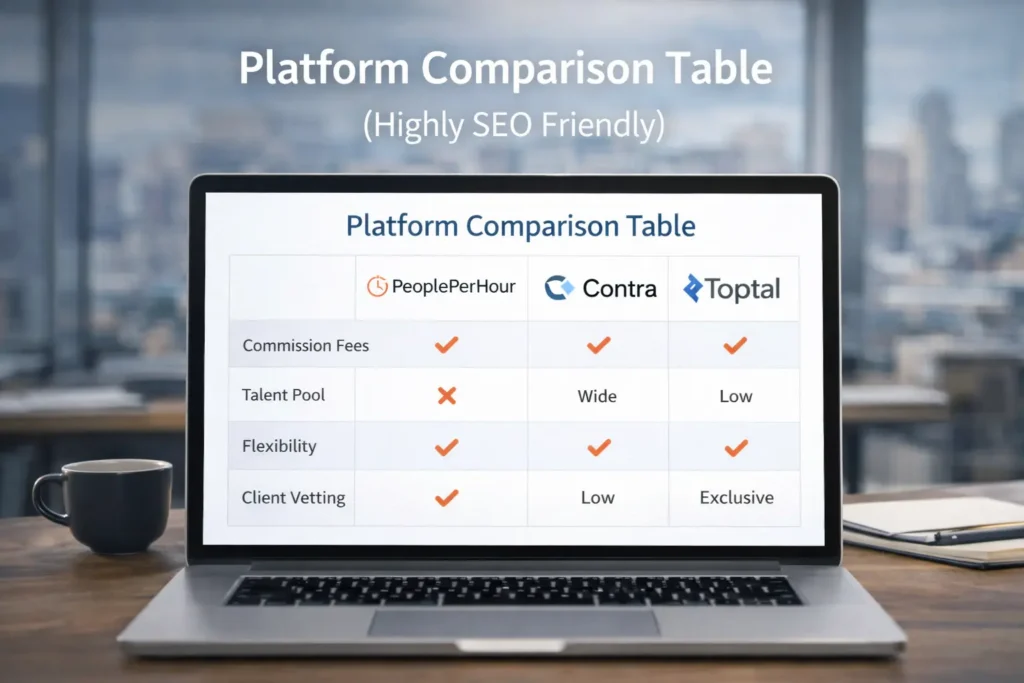
| Platform | Best For | Competition Level | Fee Structure | Income Potential | Difficulty Level |
| Upwork | Developers, marketers, writers | High | Service fee (sliding scale) | High | Medium–High |
| Fiverr | Designers, editors, creators | High | 20% commission | Medium–High | Beginner–Medium |
| Freelancer.com | General freelancers | High | Platform fee | Medium | Medium |
| Toptal | Senior professionals | Low (screened) | Platform commission | Very High | High |
| PeoplePerHour | UK-focused freelancers | Medium | Service fee | Medium–High | Medium |
| Contra | Creators & consultants | Low–Medium | No commission | Medium–High | Medium |
| Consultants & specialists | Medium | No commission | High | Medium | |
| Direct Outreach | Niche experts | Low (if targeted) | No commission | Very High | Medium–High |
Tables improve scannability and increase chances of ranking in featured snippets.
9. Common Mistakes When Choosing Freelancing Platforms
Choosing the wrong platform—or using the right one incorrectly—slows growth.
Joining Too Many Platforms
Spreading effort across 5–6 platforms reduces focus.
Master one platform before expanding.
Switching Too Fast
Freelancers often leave after 2–3 weeks without results.
Platforms require optimization and consistency.
Ignoring Niche Positioning
Generic profiles struggle everywhere.
Specialized positioning performs better on any platform.
Competing Only on Price
Low pricing attracts difficult clients.
Value positioning attracts serious clients.
Expecting Instant Results
Freelancing platforms reward consistency, reviews, and performance metrics over time.
Patience + system = growth.
10. Pro Tips to Succeed on Any Freelancing Platform
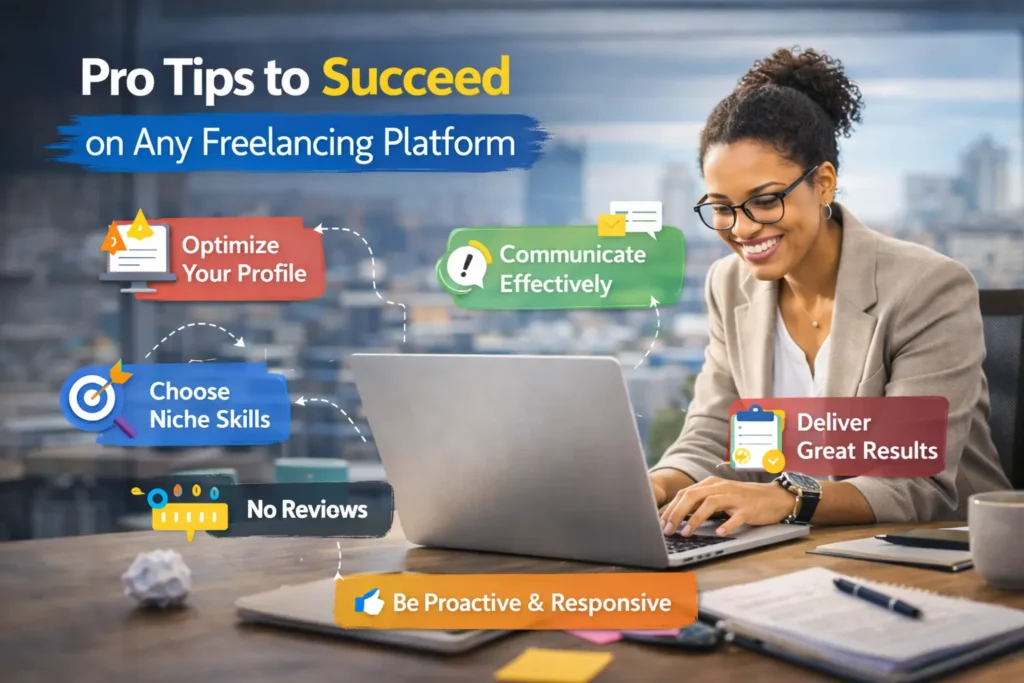
No matter which platform you choose, these universal freelancing tips apply:
- Choose a focused niche
- Build a proof-based portfolio
- Optimize profile SEO with relevant keywords
- Deliver before deadlines
- Communicate professionally
- Collect reviews early
- Raise rates gradually
- Track income and performance metrics
- Think long-term
Success is not platform-dependent.
It is positioning-dependent.
Freelancing platforms are tools.
Your strategy determines the outcome.
Frequently Asked Questions About Freelancing Platforms
Conclusion
Choosing the right freelancing platform in 2026 is not about following trends—it’s about alignment. Each platform serves a different purpose. Upwork is ideal for long-term professional contracts, Fiverr works well for gig-based services, Toptal targets elite freelancers, and LinkedIn or direct outreach support authority-driven growth. The key difference isn’t just the platform—it’s how you position yourself on it.
Clarity always beats randomness. Instead of jumping between platforms every few weeks, choose one that fits your skill level, income goals, and competition tolerance. Then optimize your profile, refine your niche, improve your proposals or gigs, and stay consistent.
Freelancing rewards patience and strategic effort. Platforms are tools—your positioning, performance, and discipline determine your income.
If you’re ready to go deeper, explore:
- → Freelancing Tips
- → Freelancing Tips for Beginners
- → Upwork Freelancing Tips
- → Fiverr Freelancing Tips
Build systems. Improve weekly. Think long-term.