

Best Freelancing Sites in 2026 (Complete Comparison Guide)
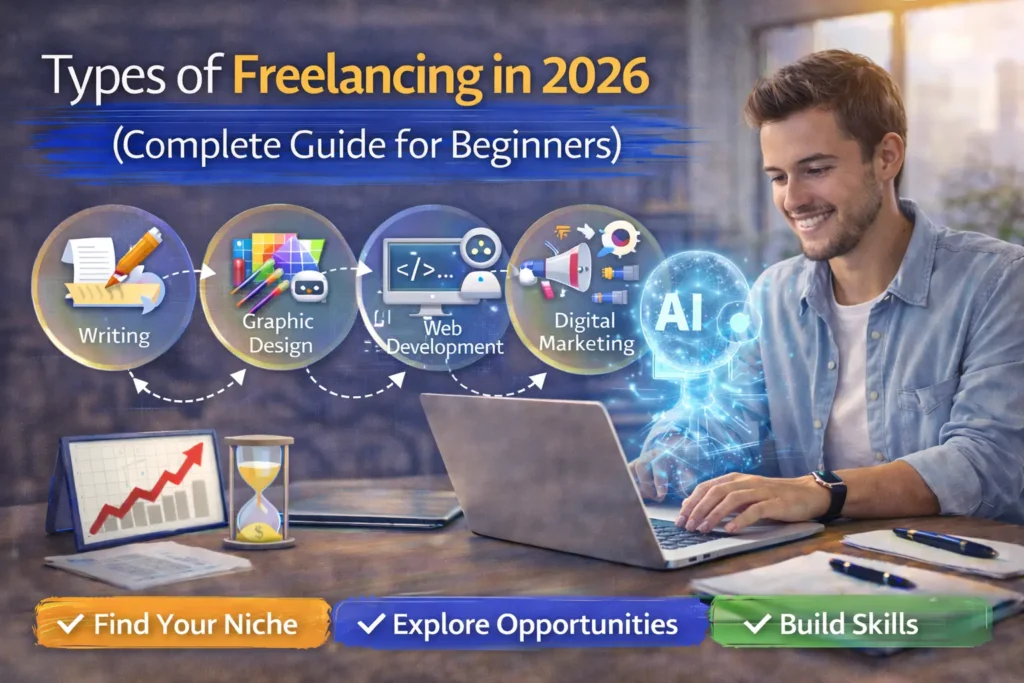
Types of Freelancing in 2026 (Complete Guide for Beginners)

How to Start Freelancing in 2026 (Step-by-Step Beginner Guide)

Best Freelancing Platforms in 2026: Complete Guide & Expert Tips

Fiverr Freelancing Tips for Beginners: How to Get Your First Order in 2026

How to Freelance in Different Life Situations (Students, Parents, Entrepreneurs)
Freelancing tips are practical strategies that help independent professionals increase their income, attract better clients, and build a sustainable freelance business. In 2026, freelancing is more competitive than ever. AI tools are accelerating productivity, global talent pools are expanding, and clients now prefer specialists over generalists. Simply having a skill is no longer enough — positioning, systems, and results matter more than ever.
This guide is for serious freelancers who want consistent income, higher-quality clients, and long-term growth instead of unpredictable gigs. Whether you work through platforms or independently, these proven freelancing tips will show you how to stand out in a crowded market.
By the end, you’ll understand how to price strategically, secure better clients, and turn your freelance career into a profitable, scalable business.
What Are Freelancing Tips?
Freelancing tips are proven strategies and business practices that help freelancers increase income, attract high-paying clients, manage projects efficiently, and build a sustainable freelance career. These tips focus on positioning, pricing, client acquisition, workflow systems, financial management, and long-term growth in a competitive global market.
15 Freelancing Tips That Actually Work
If you want a fast overview, here are the 15 proven freelancing tips for success in 2026:
- Define a clear and profitable niche
- Build a results-driven portfolio
- Create a consistent client acquisition system
- Price your services based on value, not time
- Master negotiation without discounting yourself
- Use contracts to protect scope and payments
- Systemize your workflow with tools and processes
- Focus on long-term retainers instead of one-off gigs
- Protect your time with clear boundaries
- Manage taxes, expenses, and savings properly
- Use AI tools to increase efficiency
- Continuously upgrade your skills
- Build personal brand authority online
- Identify and avoid toxic clients
- Think long-term and treat freelancing like a business
These freelancing tips form a complete growth system designed for serious freelancers who want stability and scalable income.
1. Define a Clear and Profitable Freelance Positioning
One of the biggest mistakes freelancers make is trying to offer everything to everyone. In 2026, generalists struggle. Specialists earn more.
Clear freelance positioning means knowing exactly:
- Who you help
- What problem you solve
- What result you deliver
When your positioning is specific, clients trust you faster and are willing to pay premium rates.
Niche Selection Strategy
Choosing a niche doesn’t mean limiting yourself. It means focusing your expertise.
Use this 3-part filter:
- Skill Strength – What are you genuinely good at?
- Experience Edge – Do you have industry background others don’t?
- Market Demand – Are clients actively paying for it?
The intersection of these three creates a profitable niche.
Instead of:
“I’m a freelance marketer.”
Position yourself as:
“I help eCommerce brands increase revenue through conversion-focused email marketing.”
Specificity builds authority.
Skill Stacking to Increase Value
Skill stacking means combining two or three complementary skills to become more valuable.
Examples:
- SEO + Copywriting
- Web Development + Conversion Optimization
- Graphic Design + Brand Strategy
- Paid Ads + Funnel Building
Individually, these skills are common. Combined, they create premium positioning.
Clients don’t just want task executors. They want problem solvers.
Market Demand Validation
Before committing to a niche, validate demand.
Check platforms like Upwork and Fiverr:
- How many active job listings exist?
- What are average project budgets?
- What skills are most requested?
On LinkedIn, search professionals in your niche and analyze:
- How they position themselves
- Which industries hire them
- What type of content they post
If clients are consistently paying for a service, it’s viable.
The Positioning Formula
Use this framework:
I help [specific audience] achieve [specific result] through [specific skill or system].
Example:
I help SaaS startups increase demo bookings through conversion-focused landing pages.
Clarity attracts the right clients.
The right clients pay better.
2. Build a Portfolio That Sells Results, Not Skills
Most freelancers list services.
High-earning freelancers prove results.
Clients care about outcomes, not capabilities.
Your portfolio should answer one question:
Can you deliver measurable results?
Case Study Framework That Converts
Structure each project like this:
- Client Background – Who were they?
- Problem – What challenge were they facing?
- Solution – What did you implement?
- Result – What measurable outcome did you achieve?
Example results:
- Increased conversions by 34%
- Reduced ad cost by 22%
- Grew organic traffic by 48% in 6 months
Numbers build credibility instantly.
Use the Before/After Model
The brain responds strongly to transformation.
Show:
Before → Low engagement, weak branding, poor conversions
After → Higher traffic, stronger positioning, increased revenue
Transformation creates trust.
Strategic Testimonial Placement
Don’t bury testimonials.
Place them:
- Immediately after a case study
- Near pricing sections
- On your LinkedIn profile
A strong testimonial includes:
- Specific results
- Client’s name or company (if permitted)
- Mention of professionalism or reliability
Proof Psychology: Why This Works
When hiring freelancers, clients ask themselves:
- Has this person solved this before?
- Can they deliver consistently?
- Is there social proof?
Your portfolio should reduce perceived risk.
The more proof you provide, the easier it becomes for clients to say yes.
3. Create a Simple Client Acquisition System
Freelancers fail when they rely on luck.
They grow when they rely on systems.
If you want consistent freelance income, you need a repeatable client acquisition process — not random outreach.
Think in terms of weekly actions, not motivation.
Cold Outreach Framework
Cold outreach still works in 2026 — but only when it’s personalized and value-focused.
Use this simple structure for email outreach:
Subject: Quick idea for [Company Name]
Hi [Name],
I noticed [specific issue or opportunity].
I help [target audience] achieve [specific result].
Recently, I helped [similar client] achieve [measurable result].
Would you be open to a quick 15-minute call to explore this?
Best practices:
- Keep it under 120 words
- Focus on results, not your resume
- Personalize the first line
- Avoid attachments in first email
Short, clear, and problem-oriented messages get replies.
LinkedIn Authority Strategy
LinkedIn is not just for networking — it’s for positioning.
Post consistently:
- Mini case studies
- Industry breakdowns
- Results from projects
- Strategic insights
- Lessons learned
Authority builds trust.
Trust builds inbound leads.
Instead of pitching constantly, show expertise publicly. High-paying clients prefer specialists who demonstrate knowledge.
Proposal Structure That Converts
When applying for jobs (especially on platforms), structure matters.
Use this 5-step format:
- Reference something specific from the job post
- Show you understand the core problem
- Briefly explain your approach
- Share one relevant proof example
- End with a clear next step
Example closing:
“Would you be open to a short call to align on expectations?”
Generic proposals blend in. Specific proposals stand out.
Follow-Up Cadence
Most freelancers never follow up — and lose opportunities.
Use this system:
- Day 1 – Initial message
- Day 4 – Friendly follow-up
- Day 7 – Final check-in
Keep follow-ups short and professional.
Use CRM Tools to Stay Organized
Track your outreach and pipeline using simple CRM systems like:
- Notion
- Trello
- Asana
- Even a spreadsheet
Your CRM should track:
- Leads contacted
- Replies received
- Calls booked
- Proposals sent
- Deals closed
Weekly tracking creates predictable growth.
Weekly System Thinking
Instead of hoping for clients, set weekly targets:
- 10 personalized outreach messages
- 2 LinkedIn posts
- 5 proposal submissions
- 1 follow-up cycle
Systems create stability.
Stability creates confidence.
4. Price for Value, Not Just Time
Freelancers who charge for time cap their income.
Freelancers who charge for results scale faster.
Value-based positioning increases earning potential dramatically.